Issues · Lubao, Pampanga, Philippines
Lubao grows food. About 6,900 hectares of the town are farmed and another 4,000 are fishponds; rice is the main crop. But growing food and affording food are different things — about 1 in 11 Lubao residents lives below the poverty line, and a flood can take a family's crop and its income in the same week. This page is about how feeding works here, and what it costs.
On November 2, 2026, our Lubao team — led by R.R. Dimla of the Barangay Council of Sto. Tomas — served a hot meal to 186 students. Feedings like this one run on the Philippine government's own math: the social welfare department costs a supplementary-feeding hot meal at ₱25 per person, rice and viand, cooked to national nutrition guidance. At that standard, a meal for nearly two hundred kids is careful, ordinary, repeatable work — and that is the point.
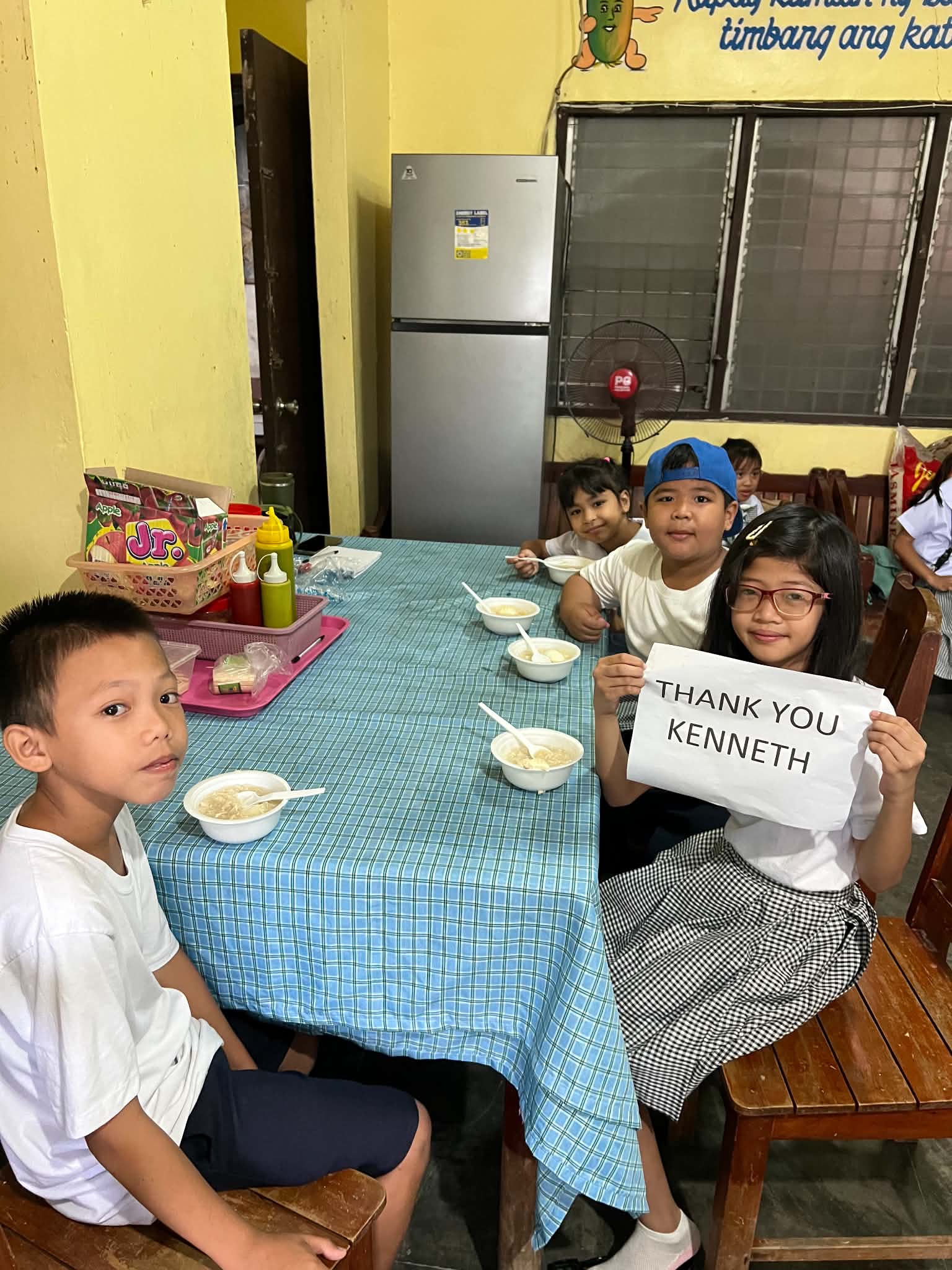
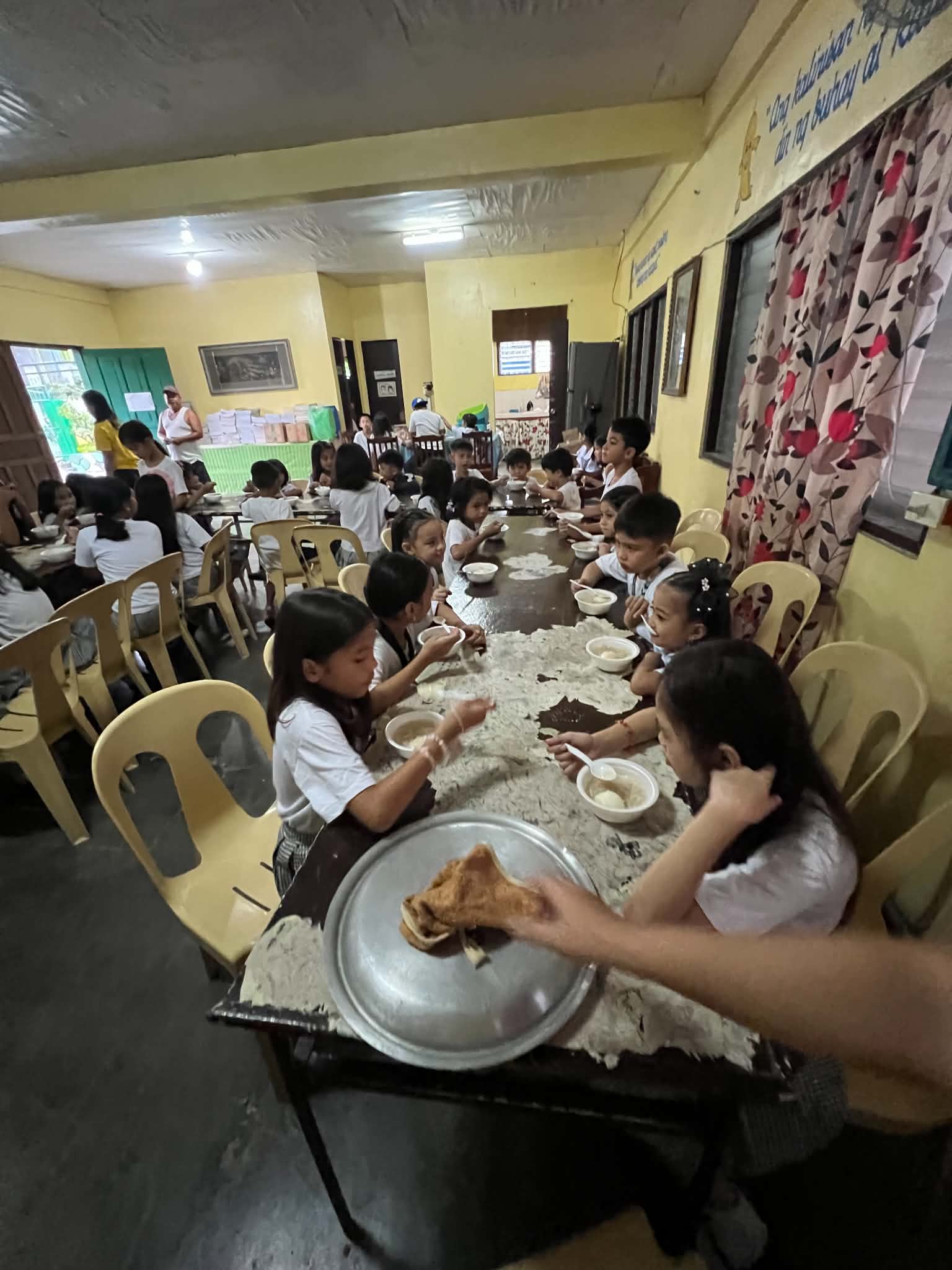
Next: in the week of November 9, 2026, the same team takes the feeding to another street in Lubao, with free haircuts and hair coloring alongside the food. Results will be posted on our community work page.
After floods and during hard weeks, the standard unit of food help in the Philippines is the DSWD family food pack. It is built to keep a family of five fed for two to three days, and the government's actual delivered cost is ₱797.80 per pack:
| Inside the pack | 6 kg of rice · 4 cans of corned beef · 4 cans of tuna · 2 cans of sardines · 5 sachets of 3-in-1 coffee · 5 sachets of choco malt drink |
|---|---|
| Rice at retail | Regular milled rice cost about ₱45 per kilo in government-monitored markets in October 2026 — so the rice alone in one pack is about ₱272 |
| In wages | One food pack costs more than a day and a third of minimum-wage work in Pampanga (₱600/day) |
| In dollars | At about ₱63 to the dollar, one pack is roughly $12.60 — $100 covers about 8 packs, eight families fed for two to three days |
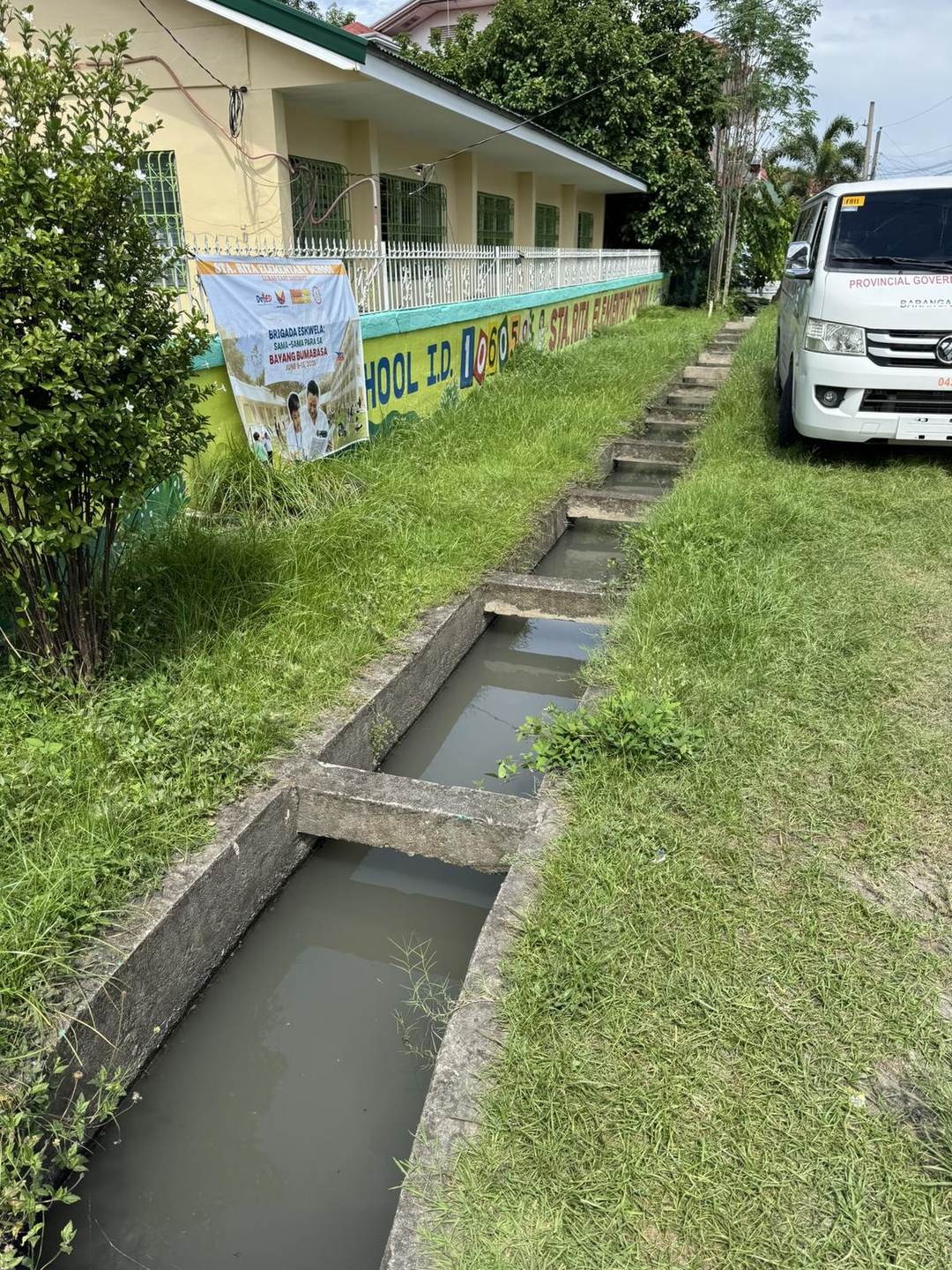
Feeding is not only relief. At Santa Rita Elementary School, the school garden has won the inter-school gardening competition three straight years, and Principal Perla G. Banting says it helps keep the school open and the children fed. The garden fits the national Gulayan sa Paaralan program, which puts vegetable gardens in public schools so harvests go straight into school feeding. Eat The Elephant's Cal Poly Pomona partners designed an expansion of that garden — edible garden beds, trellises, and shade that can be stowed before a typhoon — and the next phase is building it. It is a design today, not built work; we say so plainly, and the school's own three-year record is the reason it is worth building.
The Philippine social welfare department costs a supplementary-feeding hot meal at 25 pesos per person. On November 2, 2026, Eat The Elephant's Lubao team served 186 students.
A DSWD family food pack holds 6 kg of rice, 4 cans of corned beef, 4 cans of tuna, 2 cans of sardines, coffee and choco drink sachets. It feeds a family of five for two to three days and costs 797.80 pesos delivered.
Santa Rita Elementary School in Lubao has a school garden that won the inter-school gardening competition three years in a row. Its harvest supports school feeding, and a student design to expand it was drawn with the school in 2026.
Gifts to Eat The Elephant fund the ground work on these pages — meals, medicine, school projects, and flood-season help for families in Lubao, Pampanga.
Donate The Lubao ProjectCommunity work in Lubao · Flooding · Food & feeding · Health · Education · What a dollar does